
Lyme Regis has a compact but varied coastline, shaped by its position on the Jurassic Coast and its historic harbour. Unlike larger Dorset resorts, the beaches here are smaller and more varied, ranging from sandy areas near The Cobb to rocky, fossil-rich sections further east and west.
Each beach serves a different purpose, from swimming and sunbathing to walking and fossil hunting. For a broader overview of the town, including attractions and facilities, see our main Lyme Regis guide.
Google map Lyme Regis Town
Lyme Regis Beach (Sandy Beach)
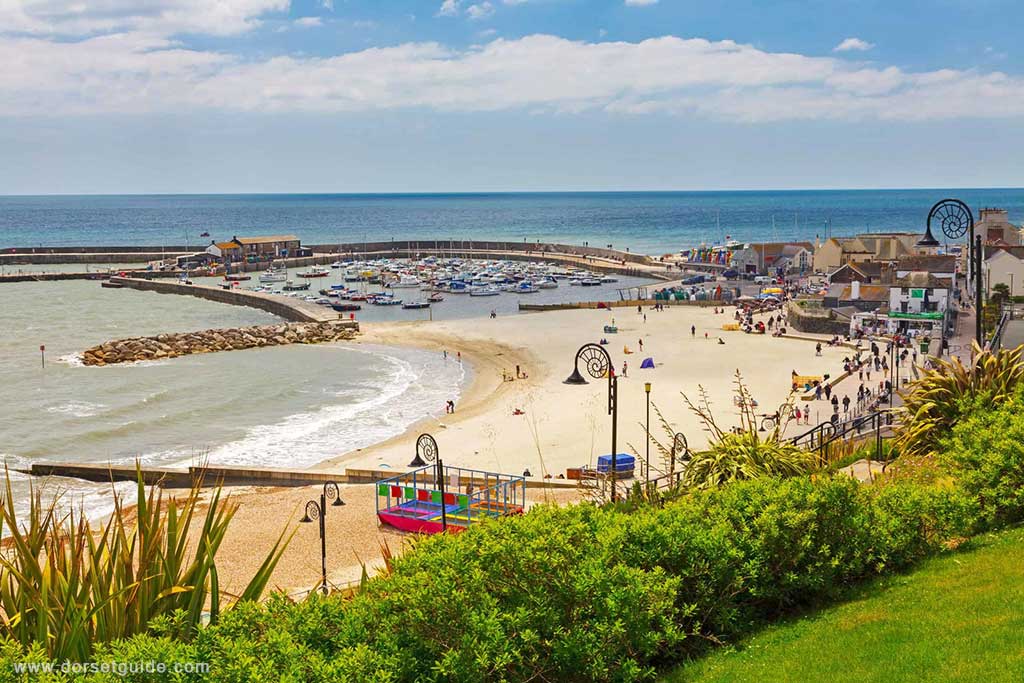
Lyme Regis Beach is the town’s main sandy beach, located between The Cobb and the stone groyne, and one of the most popular beaches in Lyme Regis. It is the only sandy section in Lyme Regis and is backed by cafés, shops and facilities, making it popular with families. The beach is relatively sheltered and suitable for swimming in calm conditions, although it can become crowded during peak summer months.
Lyme Regis Front Beach (Cobb Gate Beach)

Lyme Regis Front Beach, also known as Cobb Gate Beach, lies to the east of the main sandy beach, running along Marine Parade towards the town centre. This section is predominantly shingle with some sand exposed at low tide. It is easily accessible and close to amenities, offering open views across Lyme Bay and a convenient central location.
The Cobb and Harbour Area
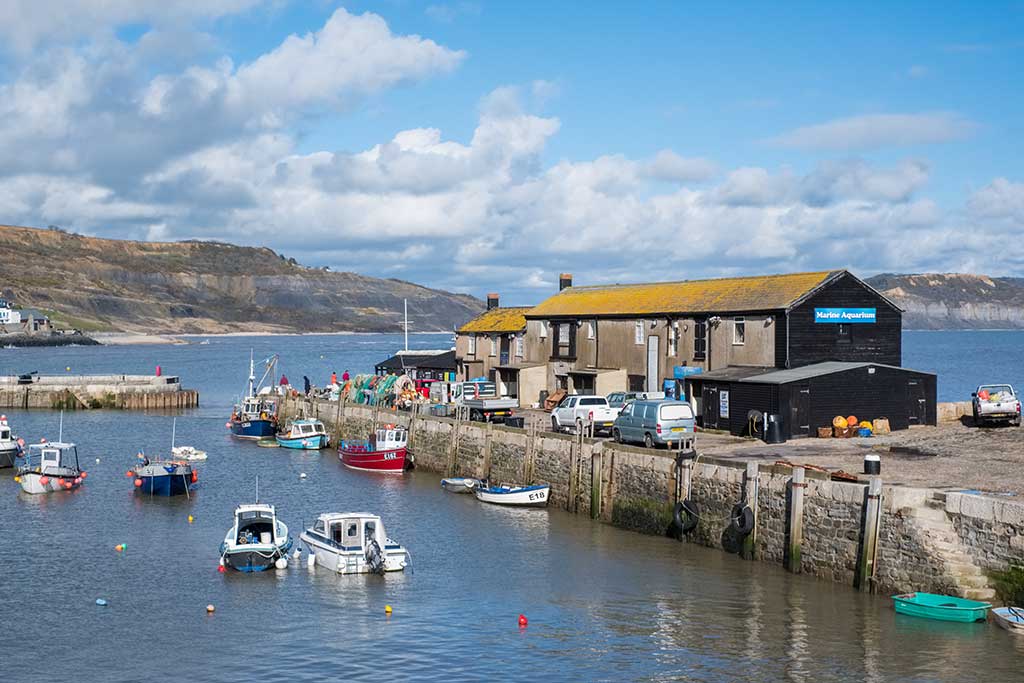
The Cobb is a historic stone harbour wall that shelters part of the beach and creates calmer water conditions. This area is often used for swimming and offers views back across the town. It is one of the defining features of Lyme Regis and provides a focal point for visitors exploring both the beach and the harbour.
Google map The Cobb
Monmouth Beach
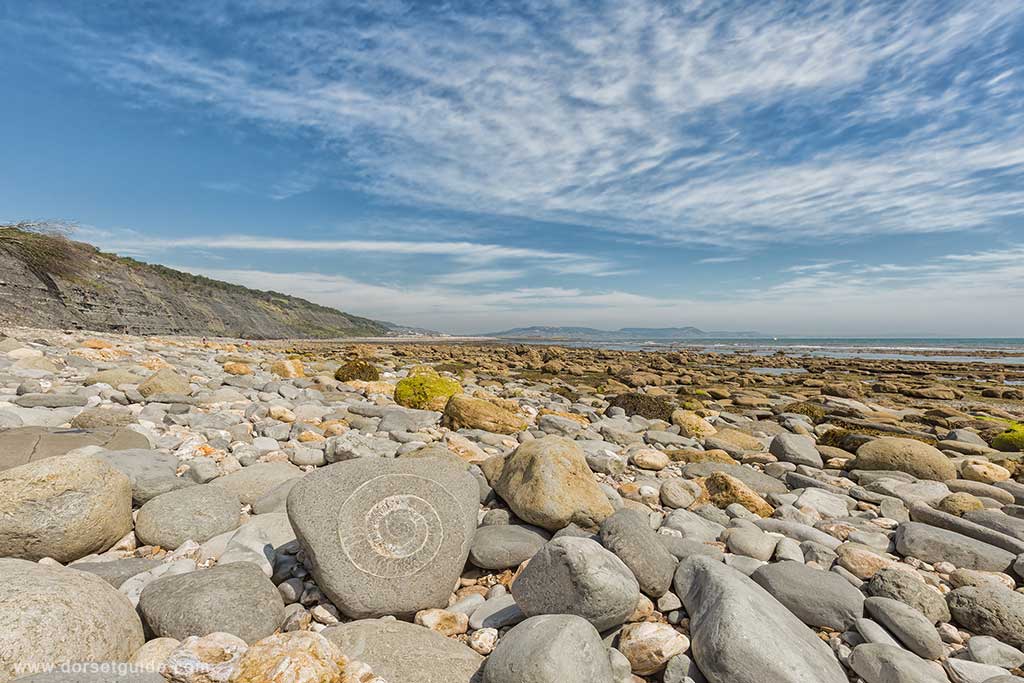
Monmouth Beach extends west of The Cobb and is one of the best-known fossil beaches in Lyme Regis. The beach is characterised by shingle and pebbles. It is well known for fossil hunting, particularly towards the far western end where ammonites and other remains can be found. The beach is less developed than the main town beaches and has a more natural setting, backed by cliffs and the distinctive ammonite pavement.
Church Cliff Beach
Church Cliff Beach is a small, quieter beach located just east of the town centre, beneath the cliffs near the Marine Theatre and the Mary Anning statue. It is mainly shingle with limited facilities and is less frequented than the main beaches. Its central location makes it easy to reach, but it retains a more secluded and less commercial character.
Google map Church Cliff Beach
Google map Mary Anning Memorial
East Cliff Beach (Back Beach)
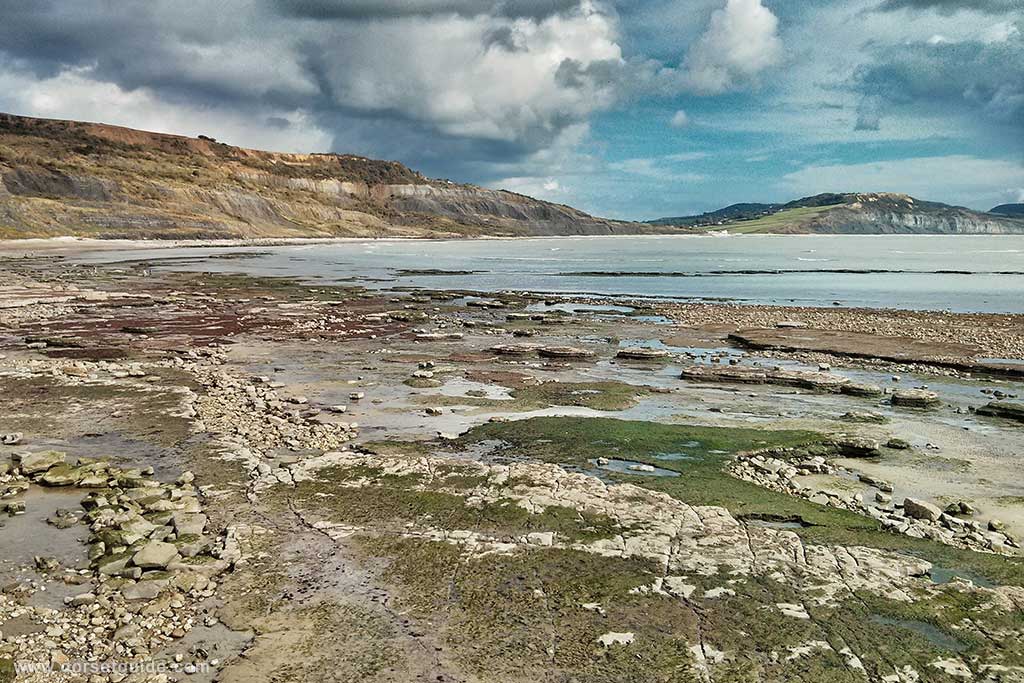
East Cliff Beach (Back Beach) lies further east and is one of the most important fossil hunting beaches in Lyme Regis. The beach is accessed either via Church Cliff Walk or by descending steps from Charmouth Road car park. The beach is rocky and uneven, making it less suitable for sunbathing but well known for fossil hunting. At low tide, rock pools are exposed, and fossils can often be found exposed along the shoreline. The cliffs behind are unstable, and visitors should keep a safe distance and avoid digging.
Google map East Cliff Beach
Google map Charmouth Road car park
Fossil Hunting in Lyme Regis
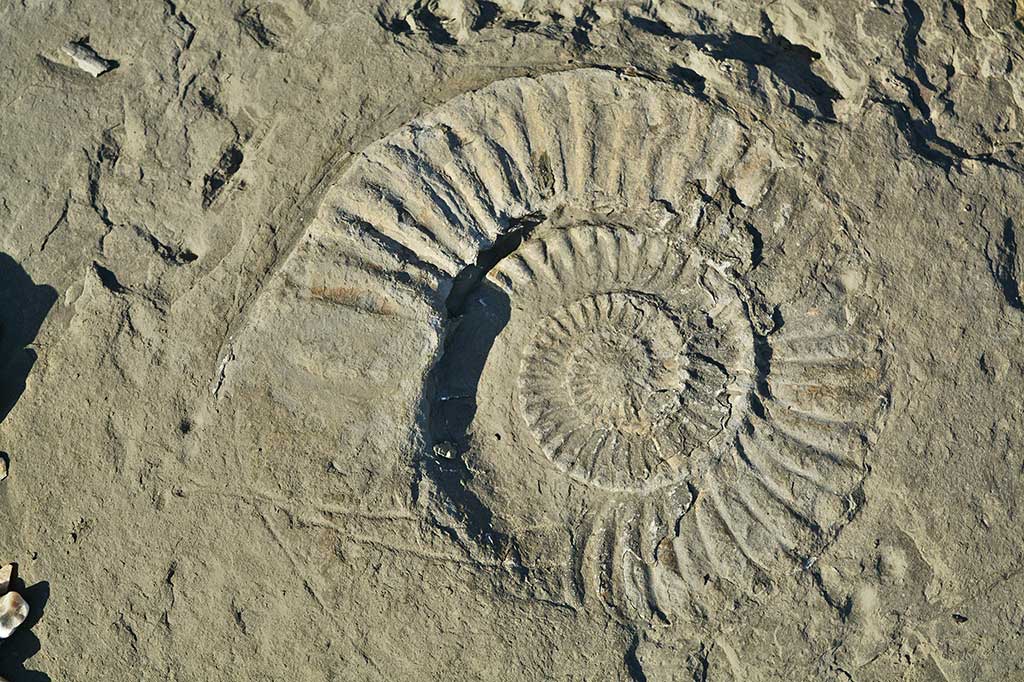
Lyme Regis is one of the most important fossil hunting locations in the UK, forming part of the Jurassic Coast. Fossils are most commonly found on the beach itself, particularly after storms or during low tide, when new material is exposed.
The safest and most effective approach is to search the loose material on the shoreline rather than the cliffs. The cliffs are unstable and prone to landslides, so digging into them is both dangerous and discouraged. Common finds include ammonites and belemnites, particularly around Monmouth Beach and East Cliff.
